Wednesday, May 7, 2008

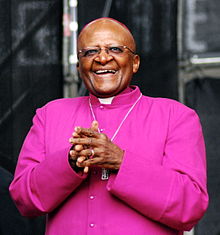
Desmond Tutu-- Repentance and Forgiveness

Background Check:
Throughout the 1900s South Africa had a government run by those who were racially white, even though the majority of the people were black. Blacks were typically accepting of whites in general, but they wanted to see some changes made in the government. The blacks wanted to be able to vote, they wanted to be able to live without fear, they wanted to have equal police with the whites. Different organizations of blacks were created to get the government to change. But the South African government determined not only that they would oppose these black organizations, but that they would attack, torture and kill those who are participating in those organizations. This oppression of the blacks was called apartheid.

His Story:
A black man named Desmond Tutu was raised in South Africa amidst these injustices. But rather than focusing on protests and violence in response to the government, he would pray and seek God for His justice. He studied in London and became a priest and then a bishop in the Anglican Church. After he became a bishop, Desmond began writing letters to the government calling on them to repent from their evil actions. The government ignored the letters. Then Desmond traveled all over the world to convince other governments and corporations to stop supporting the South African government and its violent policies against blacks. Many governments listened to Desmond and refused to have dealings with the South African government.

At this point, the Anglican church made a radical step. They made Desmond Tutu Archbishop over all of South Africa—in charge of the whole official church in South Africa. This made the South African government infuriated, but there was nothing they could do. Many whites hated Desmond and would call him up to threaten him. He would bless them in Jesus’ name and hang up.

Then, in 1989, a new president was elected in South Africa, Francis de Klerk. Because of how South Africa had suffered under the violence and economic instability under apartheid, de Klerk determined that there needed to be a change. He made it possible for black people to vote and released many black dissidents from prison. Thus, at the next election, an all-black government was elected.

It would have made sense for the new government to do what many other governments had done who were oppressed—to hurt or kill the oppressors. However, the new president, Nelson Mandela, appointed Desmond Tutu over a committee to determine how to respond to the oppressors. Under Desmond’s guidance, the committee was called the Truth and Reconciliation Commission. They would listen to the stories of oppression from blacks. Then they would bring in the whites who committed the tortures, violence and acts of hatred. They encouraged the whites to tell the truth, to confess their sin and that they would then be pardoned. Many whites accepted this, and fully spoke the truth before the whole country. They were then forgiven for their sins and allowed to leave freely. To have all of the confessions and pardons took twenty seven months. But in the end, many whites and blacks were reconciled and South Africa was able to exist as a country which welcomed both whites and blacks.

WWJD
Jesus saw his people, both white and black, suffering under aparthaid, and he saw many people doing evil in Jesus’ name, both white and black under this regime of terror. Jesus chose Desmond—already one who knew how to suffer—to make peace among his people. Even as Jesus sought the sinner and called them to repentance, so did Jesus call Desmond to accomplish the same work.

The Final Word (of Men)
Desmond Tutu is still the leader of the Anglican church of South Africa today. He is one of the most respected clergy alive today.

A Word From Our Sponsor:
Take heed to yourselves. If your brother sins, rebuke him and if he repents, forgive him; and if he sins against you seven times in the day and turns to you seven times and says, “I repent” you must forgive him. Luke 17:3-4

For if you forgive others for their transgressions, your heavenly Father will also forgive you. But if you do not forgive others, then your Father will not forgive your transgressions. Matthew 6:14-15

Helpful Hint: Loving the Unlovable

All of the faithful were hated or attacked at one time or another. But when it happened, they remembered what Jesus said: “Love your enemies.” So they would pray for their enemies and do good to them whenever they had need. Menno Simons taught all the Anabaptists to pray for the rulers that were persecuting them. Therese would find something good to say to those who complained about her. Martin Luther King prayed for the very whites who attacked him. They were consistent in loving—even those who were unloveable.

Check It Out:
Tutu: Voice for the Voiceless by Shelley Du Bois

Martin Luther King, Jr.-- No Favoritism Between Races

Background Check:
In the 1950’s the United States’ governments were run by racially white people, even though in many states most people were black. For almost a hundred years, since blacks had been released from slavery by a civil war, there had been laws which separated the whites from the blacks and restricted blacks from many places and activities that would be of benefit to them. Whites and blacks could not go to school together, they couldn’t drink from the same water fountains, they couldn’t even ride on buses together.

His Story:
A young preacher named Martin Luther King spoke against these injustices, but it didn’t seem that he could do anything—after all, he was black himself and was just a preacher. But when an outrage happened against an older black woman on a bus, then Martin organized protests there in his home town, Montgomery, Alabama. Many blacks followed him and they all publicly protested the segregation of blacks and whites on the buses—which gave the blacks the worst seats in the back. Martin would preach on the steps of city hall, preaching that Jesus taught that all people were the same in the eyes of God, no matter what their race. He also taught that if public policy and laws were insisting on favoritism against one race, then they are standing against Jesus. The bus laws were changed because of these protests and the seats were no longer segregated.

Both blacks and whites understood the power of what had happened. The blacks had a new sense of power and a realization that the Jim Crow laws might be overthrown. Many whites stood with Martin Luther King and wanted to see the favoritism stop. But many other whites were angry with the blacks and with Martin especially because they felt that they were losing their power to rule. Some of these whites were using violence in order to keep their power. One man stabbed Martin with a knife. Another group of men murdered blacks who were peacefully protesting. The police would attack protesters. Another group of men burned churches with people in them.

Martin was insistent, however, that he and his people would not fight back, nor do any kind of violence toward them. Some blacks didn’t like this policy, but Martin said that Jesus taught not to do evil back to those who do evil to you. Rather, he said, we are to love our enemies. At the same time Martin was bold in proclaiming the hard righteousness of Jesus—that of not harming others, giving to others what you want to receive for yourself.

Martin also wanted the government to stop the violence of their war in Vietnam. This made Martin very unpopular, even among his closest supporters. Martin also tried to stop the systems that caused poverty for both blacks and whites, but few listened to his message.

WWJD
Martin was preaching the message Jesus gave him—change the nation, but only through non-violence. However, Martin also saw America as being his salvation, not the kingdom of God. And Martin struggled with the sin of cheating on his wife all of his life. Jesus used Martin, but Martin was not the one to bring people to Jesus.

The Final Word
After one speech in 1967, Martin was shot and killed. This event woke people up to the evil in the segregationist party. Eventually, the whole United States eventually changed their laws and stopped segregation between whites and blacks—on buses, in education and even where they lived. However, the church did not want to listen to Martin’s message against war and against poverty. They praise him for his work against racism, but neglect to speak of his whole message.

A Word From Our Sponsor:
The woman said to Him, "Sir, our fathers worshiped in this mountain, and you people say that in Jerusalem is the place where men ought to worship." Jesus said to her, "Woman, believe Me, an hour is coming when neither in this mountain nor in Jerusalem will you worship the Father. You worship what you do not know; we worship what we know, for salvation is from the Jews. But an hour is coming, and now is, when the true worshipers will worship the Father in spirit and truth; for such people the Father seeks to be His worshipers. God is spirit, and those who worship Him must worship in spirit and truth." John 4:20-24

But love your enemies, and do good, and lend, expecting nothing in return; and your reward will be great, and you will be sons of the Most High; for He Himself is kind to ungrateful and evil men. Be merciful, just as your Father is merciful. Luke 6:35-36

Helpful Hint: Enduring Rejection and Persecution
Every one of the faithful received persecution and rejection for their stand with Jesus. As Paul said, “No one will enter into the kingdom of God without tribulation.” Even so, there isn’t a single one of the Faithful that did not face opposition, difficulties and even death for their stand for Jesus. Montanus was rejected by his own people for listening to the Spirit. Martin Luther was formally cut off from the Roman church for his stand with the word of God. Paul, Michael Sattler, Jim Elliot and Martin Luther King all were killed because of their stand for God. If you want to be one of the Faithful, expect rejection—lots of it. Rejection is bread and butter for one remaining in Jesus.

Jim and Elisabeth Elliot-- Sacrificing for the Gospel

Background Check:
The Christians in the United States in the mid-1900s were focused on giving the gospel to two groups of people: youth and other nations. In churches all over the U.S. there were many who were encouraged to participate in “missions”, that is, outreach to countries other than the U.S. There was also a number of rallies for youth to teach them to make a commitment to Christ. Thousands of youth believed in Jesus and went to Bible schools to learn more about Jesus. However, many of these youth grew to be people who were only halfway committed to Christ—believing in Jesus, but having little commitment or willingness to sacrifice themselves for the gospel.

Their Story:
Jim Elliot was a young man in Portland, Oregon. He had everything going for him—he was handsome and athletic. He was smart and good at schoolwork. He could have done anything he wanted to in life. But he chose to dedicate himself to giving the gospel of Jesus to those who had never heard it before. He was very strict on himself, disciplining his body and mind so that he would be better equipped to share the gospel. He knew that he would be in difficult terrain to walk, so he exercised regularly to make himself fit. He traveled across the country to study the Bible so he could better explain it. He would evangelize at local rallies they had for youth. And he gathered companions around him who were as dedicated as he to go to places where Jesus had never been named.

He also determined not to get married. Being married, he thought, would limit his ability to preach the gospel. His companions, though, convinced him that if he were married, that he would be better equipped to preach the gospel. It so happens there was already a girl he was interested in, back in Portland. Her name was Elizabeth and she was as dedicated to Jesus as he was. Elizabeth was thinking that she would teach the gospel to women in other countries as a single woman. But as she and Jim wrote letters over time they both realized that they loved each other and that God’s plan for them would be better served together. So as they finished their preparations, they were married.

The missions agency they were with sent them down to the jungles of South America, where almost no one had been before. There, they studied languages, especially Indian ones that might give them the opportunity to speak to Indian tribes that had never heard the gospel before. As their language study progressed, they decided to contact an Indian tribe that could only be reached by airplane. Jim and a few of his companions went to visit the area. They didn’t meet anyone there, but they knew they were being watched. They visited the area again, and then swarms of tribesmen, ready for war attacked them and killed everyone—Jim and all of his companions.

Elizabeth and the wives of the companions were heartbroken. God had taken them all of this way and they worked so hard, for what? The news of the martyred missionaries was sent back to the United States and was put in the newspapers. But the wives of the martyrs weren’t finished with missions yet.

Elizabeth wrote the story of the missionaries in a book and it became very famous. Then Elizabeth and another one of the wives decided to go back to South America and attempt to work with the tribe that had killed their husbands again. This time, with a more careful approach, they were successful. It took twenty years or more, but the tribe that had killed Jim Elliot became Christians. One of the men who had killed her husband went up to Elizabeth and wept, apologizing for his action. She forgave him and he began to follow Jesus.

The Final Word (of Men)
Jim Elliot’s martyrdom was famous in the United States. Many were shocked that such “savages” still existed. Some felt that such “backward” peoples should be destroyed. But many more were shocked at Jim Elliot’s faith and commitment to love others. A saying by Jim Elliot became famous among American Christians: “He is no fool who gives what he cannot keep to gain what he cannot lose.” Thousands were inspired by the story of Jim and Elizabeth Elliot and decided to take the gospel to those who had never heard it before like them.

A Word From Our Sponsor:
You will be hated by everyone for my name’s sake. But whoever endures to the end will be saved. Mark 13:13
Love your enemies. Do good to those who hate you, bless those who curse you, pray for those who abuse you. Luke 6:27-28

Helpful Hint: Sacrificing Oneself for Love
Often the faithful would do what was dangerous to themselves or give away everything they had. It is not enough to just love, they would say, it is essential to love sacrificially. The Bible says that we need to love with all that we have, not just to take one part of ourselves to love. If that is the case, then all that we have and all that we are should be at the disposal of others, for their needs. Paul would teach the truth of Jesus, even though he knew that he would be beaten for it. Jim Elliot was willing to sacrifice himself for the sake of those who had not heard the gospel. Michael Sattler was willing to be tortured and die for the sake of Jesus, even when he was being killed in the name of Jesus. To be faithful, it is not enough to love—you have to give up your whole self.

Check It Out:
Through Gates Of Splendor by Elizabeth Elliot
The Journals of Jim Elliot
My Enemy, My Savage by Elizabeth Elliot
Also, check out the new film, “End of the Spear” which tells the story of Jim Elliot from the perspective of one of the tribe that killed Jim Elliot

William J Seymour-- Waiting for the Spirit

Background Check:
In the late 1800s the United States was in a race division. After a great Civil War, black slaves were granted freedom from slavery, but white people still had control over all significant power and money. Blacks were not allowed to participate in anything whites participated in, and the blacks received the worst of the segregation. Even education was limited. Blacks were not accepted at colleges and universities that whites went to, and so most blacks were uneducated and the few that were educated were able to gain their education at universities paid for and run by blacks.

This situation was also true for Bible education. If anyone wanted to study the Bible in depth, they would go to a Bible school or seminary and pay money to receive the education. Almost all Bible schools and seminaries were run by whites for whites. Black people were not allowed on the campus, except for servants.

His Story:
On the campus of one Bible school in the Midwestern U.S. was a black servant named William Seymour. He worked hard at the Bible school, hoping that he might catch a bit of the teaching and so become a Bible preacher and teacher himself. However, as he approached some of the teachers, the answer was always the same: “This is a white school, not a black one. You can’t learn here.” He was disappointed, but he still asked. Finally, he asked a teacher of the book of Acts if he could take his class. The teacher said that he couldn’t sit in the classroom, but if he was quiet he could sit outside the door and listen. So day after day, William listened to the specific teaching of the book of Acts.

He learned that in Acts the apostles waited for the Spirit to come and that when he came, the Spirit wasn’t quiet and unseen. Rather he came in power and in the speaking of tongues. The teacher and William came to the same conclusion: if the apostles in Acts could receive the Spirit in this way, then all believers can. They just need to ask God and wait for it.

William began teaching this in local black churches, but they weren’t interested in hearing this new teaching. So he decided to move to Los Angeles, where people might be more interested in a radical Bible teaching. William began to hold meetings in an auditorium in Los Angeles on Azusa Street, and advertised them in the local papers. People came in, interested to hear what he would say about the Spirit. He taught them that right then and there, they needed to pray to God and ask him for the Holy Spirit. And they needed to come the next night and pray again. And they needed to pray again and again until the Spirit came.

At first, only a few came. Then a couple people began to feel the presence of the Spirit. More people came. Soon there were meetings every night of the week and William asked other teachers to come in and teach on the book of Acts. The teachers that came in were white and soon they had a mixed congregation, black and white, all praying side by side for the Holy Spirit.

Then, one day, it happened. Suddenly, the people praying for the Spirit night after night experienced what was unknown for centuries—they were speaking in languages unintelligible to anyone except God! No one tried to do this, but it came about, even as the Scripture said. The revival became front page news in Los Angeles and as the movement grew, people started to come from around the country to experience the Spirit.

WWJD
Jesus told his disciples to wait for the Spirit—and so they did, for thirty days. When the Spirit came upon the disciples, he was shown by the speaking of other languages. William Seymore did what we should all be doing—asking God to repeat the experience of the first church in our experience. Jesus blessed his effort, and granted the Spirit, just as he said he would.

The Final Word (of Men)
The meetings grew huge and it was clear that churches were going to form around these meetings. William had a vision to have churches filled with both black and white people, all of them united by the Spirit alone. However, the white teachers rejected this idea and told William that he could no longer teach at Azusa Street—he had to teach only to the blacks. William was angry and left them to form his own churches. The Azuza Street Revivals began what was later called the Pentecostal movement. The Pentecostal movement is now all over the world and changing the lives of millions around the world. Even today, however, there are many denominations of Pentecostal churches, some of them exclusively for whites, and some exclusively for blacks.

A Word From Our Sponsor:
I say to you, ask, and it will be given to you; seek, and you will find; knock, and it will be opened to you. For everyone who asks, receives; and he who seeks, finds; and to him who knocks, it will be opened. Now suppose one of you fathers is asked by his son for a fish; he will not give him a snake instead of a fish, will he? Or if he is asked for an egg, he will not give him a scorpion, will he? If you then, being evil, know how to give good gifts to your children, how much more will your heavenly Father give the Holy Spirit to those who ask Him? Luke 11:5-13

Helpful Hint: Steadfastness in God’s Calling
For every one of the Faithful there were obstacles to doing what God desired them to do. Patrick sought to do what his superiors thought he was not qualified to do. John Wycliffe had to face the displeasure of other professors and church leaders. Hudson Taylor, to get to China, had to face the rejection of other missionaries. But the Faithful knew what it was that God had desired them to do and nothing would stand in their way. No obstacle, no rejection could stop them from fulfilling the word of Jesus in their life. They knew that God was far stronger than those who stood in their way and that nothing would stop God from fulfilling his plan.

Check It Out:
The Pentecostals by Harvey Cox

Thursday, March 20, 2008

Hudson Taylor-- Faith

Background Check:
England in the 1800s was the most powerful nation on earth. It was said that “the sun never set” on the British Empire—and it is true that their Empire stretched all around the globe. And Queen Victoria was their glorious monarch who emphasized that discipline, authority and strict morality was the way to retain control over the world. Everyone in England was Christian, in one way or another, and the brand of Christianity that was accepted by most was one that upheld society and discipline in every way.

Christian England in the late 1800s had a powerful urge to declare the gospel of Jesus. After centuries of war, debate and reform about Jesus and the Bible, the church there decided that it was their responsibility to share the good news with the heathen of foreign lands. Declaring the news of Jesus to those who do not believe in him in foreign lands was called “missionary work” and the groups that sent out these “missionaries” were called “mission societies”. Mission societies had strict guidelines for what kind of people would be sent by them to heathen lands. These missionaries had to be upstanding citizens, in excellent health, typically married and strictly loyal to England.

His Story:
A man by the name of Hudson Taylor approached the mission societies in London, desiring to be sent to China. He was a man who was sick from birth and never completely overcame his illnesses. He was a man who had little money, but believed firmly that God would provide. He was firmly convinced that God had called him to go to China to teach about Jesus. And he had a new idea—instead of focusing on the coastal cities of China, as all missionary societies had done, they should take the gospel to where it had never gone before, to the inland of China.

Hudson Taylor went to many missionary societies. And he was rejected by all of them. “He is too sickly” some said. Others said that his ideas were too outlandish. And others felt that they would declare him worthy to go to the mission field, not a voice speaking in the missionary’s head. But Hudson was determined to do what God wanted him to do, even if no one would send him. So he established his own missionary society, called “China Inland Mission” (or CIM for short). In his society, the only people who would be sent are those who know that God had determined that they would go. In CIM, they wouldn’t wait for the total money to be brought in before a missionary was sent—If God was sending them, God would provide the money in his time. Soon money was gathered for the new society and they send their first group of missionaries to China, with Hudson Taylor at the head.

Hudson Taylor worked hard in China. He focused his declaration of the gospel to those who had never heard it. He learned to speak Chinese like a native and began to teach the Bible to those who wanted to hear something new. Some had trouble accepting the words of Jesus from a “foreign devil” from England—so Hudson changed his appearance so that his clothing and manner of speaking was all Chinese. And he went beyond the coast lands of China and led teams deep into the heart of China. One person who had just heard the gospel recognized the truth of it and said to Hudson, “My father and grandfather sought this truth all their lives and they died without hearing it. Why did you not come sooner?” Hudson Taylor wept at this, but was more determined to have the gospel declared to all people in China.

Hudson soon suffered setbacks. He had many attacks of sickness and often had to be returned to England so that he could be treated by the skilled doctors there. Finally, after many trips back and forth to China, Hudson remained in England to run CIM. He inspired many with his speeches and his outlandish Chinese clothing so that many joined CIM.

WWJD
Jesus insisted that his “missionaries” or apostles would go without anything. They would have to endure through great difficulties and persecutions to achieve their goal of obeying Jesus. The focus was not on success, but on faithfulness to God’s call. This is exactly what Hudson Taylor expected from himself and from his missionaries. Jesus blessed Hudson Taylor’s mission with great success—but not during his lifetime.

The Final Word (of Men)
Because of Hudson Taylor and others like him, China today has a powerful underground church that preaches the gospel of Jesus without any foreign or government influence, even though they are persecuted by the Chinese government. China Inland Mission changed their name to CIM International, still trying to be focused on “faith missions.” However, most missions agencies insist, unlike Hudson Taylor, that missionaries be sent to another country only after they have raised enough commitments that people would sent large amounts of money every month. Missions agencies like Hudson Taylor’s almost do not exist anymore.

A Word From Our Sponsor:
The disciples came to Jesus and said, “Why could we not do this deed?” And Jesus replied, “Because of your little faith. For truly, I say to you, if you have faith as a grain of mustard seed, your will say to this mountain, ‘Move from here to there,’ and it will move. Nothing will be impossible to you.” Matthew 17:19-20

Helpful Hint: Teaching the Truth of Jesus
The church that takes on Jesus’ name has taught many things over the years, from many different sources. However, the Faithful focus their teaching only on what Jesus himself taught. While they may teach other things, Jesus’ teaching is the focus of all that they say and do. Paul was persecuted by the Jews for insisting that Jesus was sufficient. Michael Sattler insisted that the true church is based on the teaching of Jesus and not anything else. John Wesley taught the teaching of Jesus carefully, not allowing it to be made impure by any other teaching. When giving the truth to others, the Faithful are sure that they are speaking the truth of Jesus, not of others.

Check It Out:
Hudson Taylor’s Spiritual Secret by Mr. and Mrs. Howard Taylor

Therese of Lisieux-- Humility

Background Check:
As the Reformation in Europe settled down, France remained a Roman Catholic country, devoted to the Pope. But in the late 1700s, a revolution occurred in France, toppling the monarchy and killing many magistrates and rulers, including many bishops and priests of the church. Many of the French (and most of Europe) stopped being dedicated to the church, but rather devoted themselves to the principles of “reason” and “enlightenment”, which meant that they were not devoted to God at all, but rather their own thinking. Many people no longer felt that it was necessary to obey God, to honor the church or to do anything but what is for their own good. However, there was still a strong Catholic population in France, and many were extremely devoted to the church.

Her Story:
Among these was the Martin family, who were well off, but very dedicated to the church. So much so, that when the second daughter was determining her life, she decided to become a nun, someone who had taken vows to never be married but to spend her life praying and honoring Jesus. And in fact, the oldest daughter also became a nun, which left the youngest daughter, Therese, the most beloved of her father, to remain at home and take care of her father in his old age. However, from a young age Therese had determined that she would be a “religious”—even before her older sisters had made their decisions. And so when she became old enough, she too became a nun, which broke the heart of her father, although he understood the decision.

The life of a nun is filled with prayer and doing small tasks. They take care of all the work there themselves and most spare time is spent in worship and prayer. But as with anything, the attitude one has toward the work makes a difference. Early on, Therese was very dedicated to the work and prayer, but soon another girl joined the convent who was about Therese’s age. Therese enjoyed her company quite a bit and the girls would spend time chatting and whispering during worship. Then Therese decided that she needed to devote herself to Jesus, her “husband”, and not to be distracted. So she told her new friend that she wouldn’t be spending time with her, but with Jesus alone.

But how was one to devote oneself? There were many ways to chose from, even in a convent. One could aim to be the leader, one of the “mothers” of the convent. One could dedicate oneself to service, working hard. One could dedicate oneself to prayer, becoming strict in devotion to God. Therese decided not to focus on any of these ways, but to dedicate herself to love—to treating her sisters in the convent so well that they felt as if Jesus himself were responding to them. In her dedication to love, she would focus on how she could benefit her sisters and do all she could to help them. She did not do this so much in service, but in attitude.

If she dedicated herself to love, she decided, she would dedicate herself to humility. If she were to truly love her sisters, she must be the lowest of them all. She resolved that would do whatever they asked of her, and would never complain. She strictly obeyed the “mothers” of the convent, and always be pleasant around all the sisters, never giving another sister cause for alarm or discomfort. This did not give her honor in the convent—in fact the sisters complained about her just as much as they ever did. But even if they accused her falsely, she would not say a word, but accept her punishment without complaint.

Even when she grew very sick, she did not change her attitude of love and humility. She began spitting up blood and became very weak and had to spend most of her days in bed. But in every situation, she would still do all she could to remain pleasant and helpful to the other sisters. There was one sister in particular, whom Therese didn’t like at all. She had many irritating habits and would make noises during their worship times. Therese was very irritated, but she was devoted to loving this sister. So instead of avoiding her, she would go out of her way to say kind things to her and to honor her as much as possible. The sister never knew how much Therese disliked her, but rather thought that Therese liked her best of all.

WWJD
Therese did not live a dramatic, adventurous, dangerous life like Jesus did. She didn’t make bold statements like Jesus did. But, like Jesus, she set her ideas and her honor aside in order to serve others. In her own unique way, she showed that a person can live a quiet life, and still take up the cross, sacrificing herself for the way of Jesus. Also, like Jesus, she saw the reality of the spirit world and how it changes the physical world through prayer. Jesus loved her “little way” and blessed her greatly for showing this way to multitudes.

The Final Word (of humans)
Therese’s convent mother recognized Therese’s uniqueness in love, especially while she was ill, and asked her to write her autobiography—the story of her life. Another sister asked Therese to write her way of life, which Therese called “the little way”, because it was the opposite of the great and dramatic ways that some saints have chosen. Her writings were collected and published as a book, called “The Story of a Soul”. Therese died at 26 of the illness that afflicted her. She was known by no one but her family and convent when she died. But when her book became known, many thousands determined to follow the “little way” like Therese.

A Word From Our Sponsor
When you are invited by someone to a wedding feast, do not take the place of honor, for someone more distinguished than you may have been invited by him, and he who invited you both will come and say to you, 'Give your place to this man,' and then in disgrace you proceed to occupy the last place. But when you are invited, go and recline at the last place, so that when the one who has invited you comes, he may say to you, 'Friend, move up higher'; then you will have honor in the sight of all who are at the table with you. For everyone who exalts himself will be humbled, and he who humbles himself will be exalted. Luke 14:8-11

Helpful Hint: Seeking Lowliness and Service
The Faithful were interested in being slaves to Jesus, and that’s all. They weren’t interested in power. They weren’t interested in personal gain. They didn’t seek high positions, although most of them could have had them if they wanted them. And even if positions were given to them—like John Wycliffe and Desmond Tutu—they used their positions to serve the lowly, not to gain more glory for themselves. Francis never sought to be an important person, and the only position he ever gained he surrendered freely at the end of his life. John Wesley could have been an important priest, but he determined to preach the gospel to whoever needed it. Ignatius could have sought worldly position and power—but he determined to be poor, serving Jesus alone instead. The life of the Faithful may not be glamorous, but God’s glory is so much more than what the world can give.

Check It Out:
Story of A Soul: The Autobiography of Therese of the Infant Jesus

George Muller-- Trusting God

Background Check:
The main religious group in Germany by the late 1700s were the Lutherans. As Lutheranism developed, however, the original cry of Martin Luther “Salvation by Faith Alone” became “salvation by believing in the right doctrine.” Most Lutherans thought that if you believed the right things about God and Jesus, then you were going to go to heaven. Some believers, though, were reading their Bibles and firmly believed that it mattered just as much how one lived in Christ. These were called Pietists, and they focused on the reading of God’s word and in living holy lives before God.

His Story:
George Muller, a young man in the early 1800s, was raised a Lutheran, but became influenced by the Pietists in Germany. Excited to live a life of faith in God, he traveled to England to be a missionary to the Jews there. When he arrived in England, he met some members of the Brethren movement, who believed that Christians should not participate in the affairs of earthly government and in simple living.

Muller decided to live according to Scripture’s radical way. He and his wife gave away all of their property, and refused to accept a pastor’s salary, instead receiving only what was given to them through offerings. One of the main ways a church would receive money in those days is by families “renting” pews—paying a certain amount per year in order to have a seat reserved especially for them. Muller stopped that practice, saying that seats in a church should not be sold to the highest bidder. All of these changes left Muller in a difficult situation. He now had no regular income with which to pay for his food and clothing. He and his wife made due with little, but when they were in great need, they did not go to the wealthy people and ask for funds. Rather, they prayed to God and asked him for what they needed. During that time, they learned that God would provide for all their needs and they could live by depending only on the Lord.

A congregation in Bristol, England asked Muller to take the pulpit there. George began preaching about giving to the poor and needy. Suddenly, there was a terrible outbreak of cholera, a terrible disease, that killed many people in Bristol. Muller believed that God was calling him and his wife to assist the poor during this time. They helped many survive that disease. After this, Muller decided to open an orphanage for children without parents to live in and to learn God’s word in. Again, they prayed to the Lord and let their intentions be known, but they did not ask anyone for money. This was their experiment—would God provide for them, if they only ask for their needs in prayer?

But God came through. Money came in, a building was provided as well as all of the necessary food and clothing. Many times there was not enough food to feed all of the children, but the Mullers and their helpers would pray and—in the last minute before the meal—food or funds would come in to provide for the children’s needs. George wrote a journal of his experiences day by day, to testify to God’s power and provision. By the end of his life, the account books showed that George Muller gave away about 3 million dollars that he had never asked for!

WWJD
Jesus told his disciples to completely trust in God for their provision. They could feel free to completely surrender their whole lives to building God’s kingdom, because God would grant them everything they need. Jesus himself lived this out, depending on others to provide for him and his disciples as he traveled around and taught about God’s kingdom. George followed this principle precisely, and Jesus provided his example just as the economics of the whole world was changing, to show that trust in God never becomes outdated.

A Word From Our Sponsor:
Do not store up for yourselves treasures on earth, where moth and rust destroy, and where thieves break in and steal. But store up for yourselves treasures in heaven, where neither moth nor rust destroys, and where thieves do not break in or steal; for where your treasure is, there your heart will be also. For this reason I say to you, do not be worried about your life, as to what you will eat or what you will drink; nor for your body, as to what you will put on. Is not life more than food, and the body more than clothing?… You of little faith! Do not worry then, saying, 'What will we eat?' or 'What will we drink?' or 'What will we wear for clothing?' … But seek first His kingdom and His righteousness, and all these things will be added to you. So do not worry about tomorrow; for tomorrow will care for itself. Matthew 6:19-21, 25, 31, 33-34

Helpful Hint: Trusting in God’s Provision
Most people clamor and seek other people to provide for their daily needs—jobs, handouts, security from people. However, the Faithful look only to God for their support, only to Him for their provision. Anthony was in the desert, depending on God for food. George Muller never asked from anyone, but waited on God alone to provide. As we will see, Hudson Taylor sent his missionaries out without their provision to do the task, and they all prayed to God to provide. To be faithful to God is to trust that God would be the Good Father he is and to give all that his children need.

Check It Out:
The Autobiography of George Muller
George Muller of Bristol by A.T. Pierson