Background Check:
Throughout the 1900s South Africa had a government run by those who were racially white, even though the majority of the people were black. Blacks were typically accepting of whites in general, but they wanted to see some changes made in the government. The blacks wanted to be able to vote, they wanted to be able to live without fear, they wanted to have equal police with the whites. Different organizations of blacks were created to get the government to change. But the South African government determined not only that they would oppose these black organizations, but that they would attack, torture and kill those who are participating in those organizations. This oppression of the blacks was called apartheid.
His Story:
 A black man named Desmond Tutu was raised in South Africa amidst these injustices. But rather than focusing on protests and violence in response to the government, he would pray and seek God for His justice. He studied in London and became a priest and then a bishop in the Anglican Church. After he became a bishop, Desmond began writing letters to the government calling on them to repent from their evil actions. The government ignored the letters. Then Desmond traveled all over the world to convince other governments and corporations to stop supporting the South African government and its violent policies against blacks. Many governments listened to Desmond and refused to have dealings with the South African government.
At this point, the Anglican church made a radical step. They made Desmond Tutu Archbishop over all of South Africa—in charge of the whole official church in South Africa. This made the South African government infuriated, but there was nothing they could do. Many whites hated Desmond and would call him up to threaten him. He would bless them in Jesus’ name and hang up.
Then, in 1989, a new president was elected in South Africa, Francis de Klerk. Because of how South Africa had suffered under the violence and economic instability under apartheid, de Klerk determined that there needed to be a change. He made it possible for black people to vote and released many black dissidents from prison. Thus, at the next election, an all-black government was elected.
It would have made sense for the new government to do what many other governments had done who were oppressed—to hurt or kill the oppressors. However, the new president, Nelson Mandela, appointed Desmond Tutu over a committee to determine how to respond to the oppressors. Under Desmond’s guidance, the committee was called the Truth and Reconciliation Commission. They would listen to the stories of oppression from blacks. Then they would bring in the whites who committed the tortures, violence and acts of hatred. They encouraged the whites to tell the truth, to confess their sin and that they would then be pardoned. Many whites accepted this, and fully spoke the truth before the whole country. They were then forgiven for their sins and allowed to leave freely. To have all of the confessions and pardons took twenty seven months. But in the end, many whites and blacks were reconciled and South Africa was able to exist as a country which welcomed both whites and blacks.
WWJD
Jesus saw his people, both white and black, suffering under aparthaid, and he saw many people doing evil in Jesus’ name, both white and black under this regime of terror. Jesus chose Desmond—already one who knew how to suffer—to make peace among his people. Even as Jesus sought the sinner and called them to repentance, so did Jesus call Desmond to accomplish the same work.
The Final Word (of Men)
Desmond Tutu is still the leader of the Anglican church of South Africa today. He is one of the most respected clergy alive today.
A Word From Our Sponsor:
Take heed to yourselves. If your brother sins, rebuke him and if he repents, forgive him; and if he sins against you seven times in the day and turns to you seven times and says, “I repent” you must forgive him. Luke 17:3-4
For if you forgive others for their transgressions, your heavenly Father will also forgive you. But if you do not forgive others, then your Father will not forgive your transgressions. Matthew 6:14-15
Helpful Hint: Loving the Unlovable
 All of the faithful were hated or attacked at one time or another. But when it happened, they remembered what Jesus said: “Love your enemies.” So they would pray for their enemies and do good to them whenever they had need. Menno Simons taught all the Anabaptists to pray for the rulers that were persecuting them. Therese would find something good to say to those who complained about her. Martin Luther King prayed for the very whites who attacked him. They were consistent in loving—even those who were unloveable.
Check It Out:
Tutu: Voice for the Voiceless by Shelley Du Bois
Throughout the 1900s South Africa had a government run by those who were racially white, even though the majority of the people were black. Blacks were typically accepting of whites in general, but they wanted to see some changes made in the government. The blacks wanted to be able to vote, they wanted to be able to live without fear, they wanted to have equal police with the whites. Different organizations of blacks were created to get the government to change. But the South African government determined not only that they would oppose these black organizations, but that they would attack, torture and kill those who are participating in those organizations. This oppression of the blacks was called apartheid.
His Story:
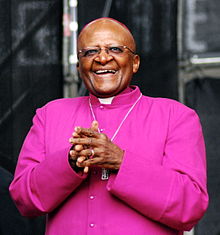
At this point, the Anglican church made a radical step. They made Desmond Tutu Archbishop over all of South Africa—in charge of the whole official church in South Africa. This made the South African government infuriated, but there was nothing they could do. Many whites hated Desmond and would call him up to threaten him. He would bless them in Jesus’ name and hang up.
Then, in 1989, a new president was elected in South Africa, Francis de Klerk. Because of how South Africa had suffered under the violence and economic instability under apartheid, de Klerk determined that there needed to be a change. He made it possible for black people to vote and released many black dissidents from prison. Thus, at the next election, an all-black government was elected.
It would have made sense for the new government to do what many other governments had done who were oppressed—to hurt or kill the oppressors. However, the new president, Nelson Mandela, appointed Desmond Tutu over a committee to determine how to respond to the oppressors. Under Desmond’s guidance, the committee was called the Truth and Reconciliation Commission. They would listen to the stories of oppression from blacks. Then they would bring in the whites who committed the tortures, violence and acts of hatred. They encouraged the whites to tell the truth, to confess their sin and that they would then be pardoned. Many whites accepted this, and fully spoke the truth before the whole country. They were then forgiven for their sins and allowed to leave freely. To have all of the confessions and pardons took twenty seven months. But in the end, many whites and blacks were reconciled and South Africa was able to exist as a country which welcomed both whites and blacks.
WWJD
Jesus saw his people, both white and black, suffering under aparthaid, and he saw many people doing evil in Jesus’ name, both white and black under this regime of terror. Jesus chose Desmond—already one who knew how to suffer—to make peace among his people. Even as Jesus sought the sinner and called them to repentance, so did Jesus call Desmond to accomplish the same work.
The Final Word (of Men)
Desmond Tutu is still the leader of the Anglican church of South Africa today. He is one of the most respected clergy alive today.
A Word From Our Sponsor:
Take heed to yourselves. If your brother sins, rebuke him and if he repents, forgive him; and if he sins against you seven times in the day and turns to you seven times and says, “I repent” you must forgive him. Luke 17:3-4
For if you forgive others for their transgressions, your heavenly Father will also forgive you. But if you do not forgive others, then your Father will not forgive your transgressions. Matthew 6:14-15
Helpful Hint: Loving the Unlovable
Check It Out:
Tutu: Voice for the Voiceless by Shelley Du Bois

